
Drone Sales: Why Marketing Is Hard And How to Fix It
Mar 26, 2026
You didn't get into drones because you wanted to become a marketer. You got in because you're good in the air, precise, technical, reliable. But somewhere between finishing a job and growing a business, most drone service providers hit the same invisible wall: few clients and unpredictable pipeline.
The honest truth is that drone sales and marketing is hard, because the specific challenges that come with running a field-based, technical service business make consistent outreach genuinely difficult. The good news is that every one of those challenges has a fix.
This post breaks down the 5 most common reasons drone marketing fails and gives you the exact systems and resources to overcome each one.
The Real Problem: Why Drone Sales Is Uniquely Difficult
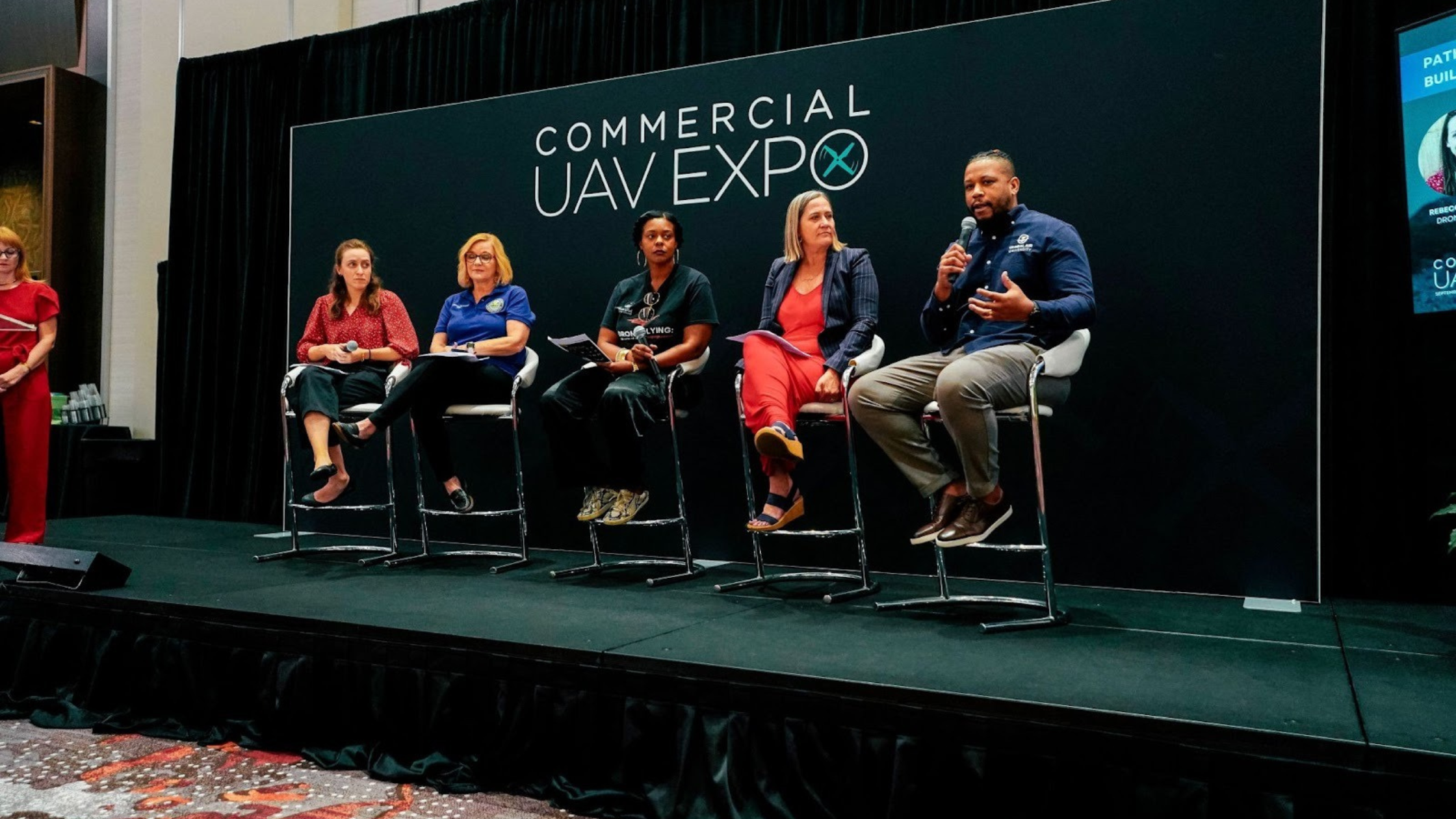
Most marketing advice is built for office-based businesses with dedicated sales staff, marketing budgets, and regular working hours. Drone service providers operate in a completely different reality.
You're managing flight operations, equipment, weather delays, site access, data processing, client reports, compliance, and billing, often as a solo operator or small team. By the time the field work is done, the last thing you have energy for is sitting down to write outreach messages, update your CRM, or post on LinkedIn.
This isn't a discipline problem. It's a structural problem. And it requires structural solutions, not motivational advice.
Reason 1: You're Too Busy in the Field to Do Consistent Outreach
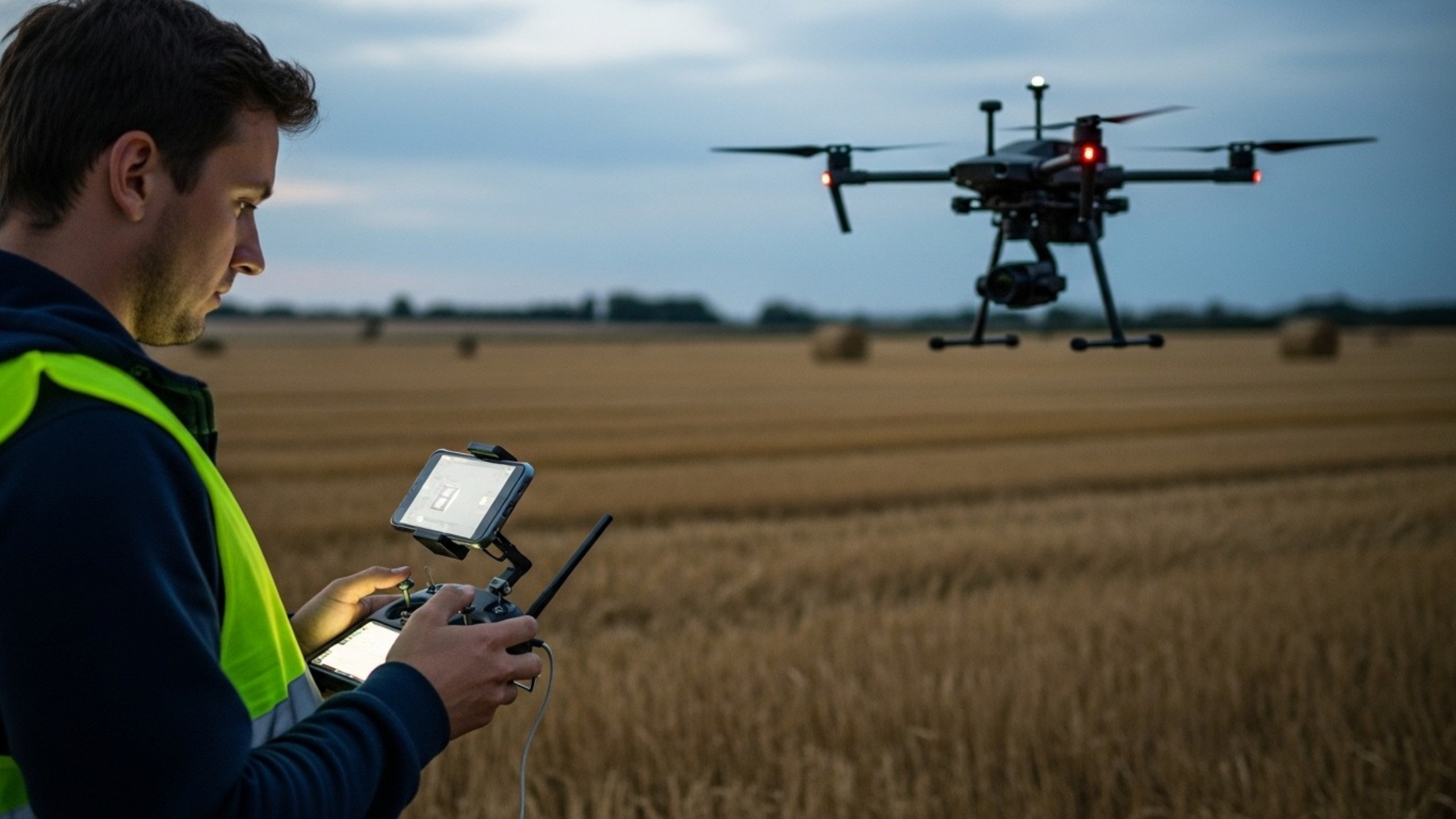
This is the number one reason drone businesses stall. The operators doing the most field work are often the ones doing the least business development , not because they don't want to grow, but because earning today leaves no time to sell for tomorrow.
The trap looks like this: you land a project, focus on delivering it well, and by the time it wraps up, you have nothing queued in the pipeline. You scramble to find the next job. You land it. Repeat.
This feast-and-famine cycle is the signature of a business with no operating system for sales, just reactive hustle.
The Solution:
Sales activity has to be scheduled and protected like a flight operation. Block dedicated outreach time, even 45 minutes, three days a week and treat it as non-negotiable. The goal is not to do everything at once. It's to stay in motion. A small amount of consistent outreach compounded over months produces a full pipeline. Sporadic outreach in bursts produces nothing.
Pair that discipline with a simple CRM pipeline so you always know exactly who to follow up with and when. You don't need enterprise software. You need a system that keeps deals moving without requiring you to remember everything manually.
Explore GAU's Sales & Growth Systems - built to help drone entrepreneurs build pipelines that move without constant manual effort.
Reason 2: No Marketing or Sales Background
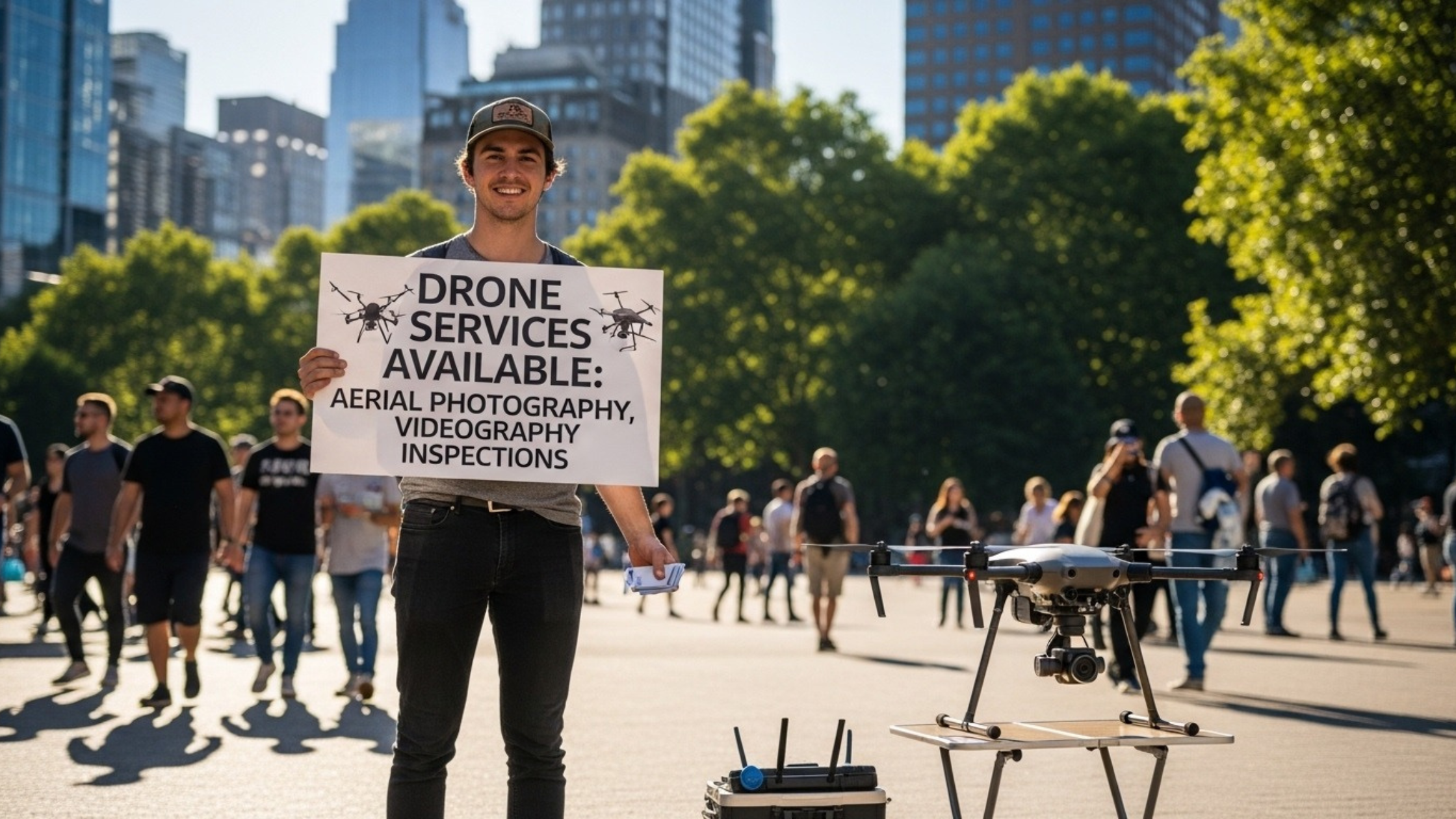
Most drone operators come from engineering, military, surveying, agriculture, real estate photography, or other technical fields. Very few come from sales or marketing. That means the skills that got you good at the work are not the same skills that get you paid for the work.
This creates a specific kind of frustration: you know your service is excellent, you know it delivers value, but you can't translate that into language that makes a prospect say yes. So you default to describing what you do and prospects don't see why it matters to them.
The Solution:
Sales and marketing for drone businesses is a learnable skill, but you have to learn the version that works for technical, B2B services, not the generic version built for consumer products or retail businesses.
The core shift is this: stop describing your service and start describing the outcome and the problem it solves. 'We conduct thermal inspections of commercial rooftops' is a description. 'We help facilities managers identify insulation failures before they become costly repairs' is a sales message.
Every piece of outreach, every proposal, every intro sentence should be built around the buyer's problem, not your capability list.
The Drone Business Blueprint covers exactly this - step-by-step sales messaging, client acquisition strategy, and growth frameworks for drone operators at every stage.
Reason 3: Random Marketing With No Ideal Client Profile

Random marketing is the single most expensive mistake a drone business can make, not in dollar terms, but in time. Posting general content, sending generic emails, and reaching out to 'anyone who might need drones' produces close to zero return because your message is relevant to no one in particular.
Marketing only works when it's aimed precisely. And precise marketing starts with your Ideal Client Profile (ICP), a specific definition of the exact type of company you are best positioned to serve, in a specific sector, with a specific problem, at a specific scale.
Without an ICP, you're broadcasting. With one, you're targeting.
What a strong drone ICP includes:
- Industry sector and sub-sector (e.g., mid-size commercial construction firms, not just 'construction')
- Asset or operational profile (the type of sites, infrastructure, or land they manage)
- The specific problem they have that drone data solves
- Indicators that they're already buying services like yours
- Company size and budget signals that indicate they can afford your rates
Once your ICP is defined, every piece of content you create, every message you send, and every platform you use to reach clients becomes dramatically more effective, because you're speaking directly to one person's reality instead of vaguely at an entire industry.
How to Build an ICP for Drone Services: A Step-By-Step Framework — the complete GAU guide to defining your ideal client profile and using it to sharpen every part of your marketing.
Reason 4: Weak or Generic Messaging

'We provide drone services for construction clients.'
That sentence appears in some variation in thousands of drone business websites, LinkedIn bios, and cold emails. And it converts almost no one. Not because construction companies don't need drone services, but because that sentence gives them no reason to care, no specific problem solved, and no differentiation from every other operator saying the same thing.
Generic messaging is a symptom of not knowing your ICP well enough. When you know exactly who you're talking to and what they're struggling with, your messaging becomes specific, urgent, and compelling almost automatically.
The Solution:
Rebuild every client-facing message around three elements: the problem, the consequence of not solving it, and your specific solution. For example:
Weak: 'We offer drone inspection services for energy companies.'
Strong: 'We help energy operators reduce manual inspection costs and catch structural issues before they become safety incidents, using thermal and visual drone data that's delivered within 48 hours of flight.'
The second version names a real pain (costs and safety risk), delivers a specific outcome (48-hour turnaround), and demonstrates operational competence. That's a message that earns a response.
Apply this structure to your website headline, your LinkedIn summary, your proposal introduction, and the first sentence of every cold outreach message. The impact is immediate.
Download the Drone Business Proposal Template - a professionally designed, customizable template built to close drone service contracts with clear, compelling messaging.
Reason 5: Inconsistent Outreach and No Follow-Up System
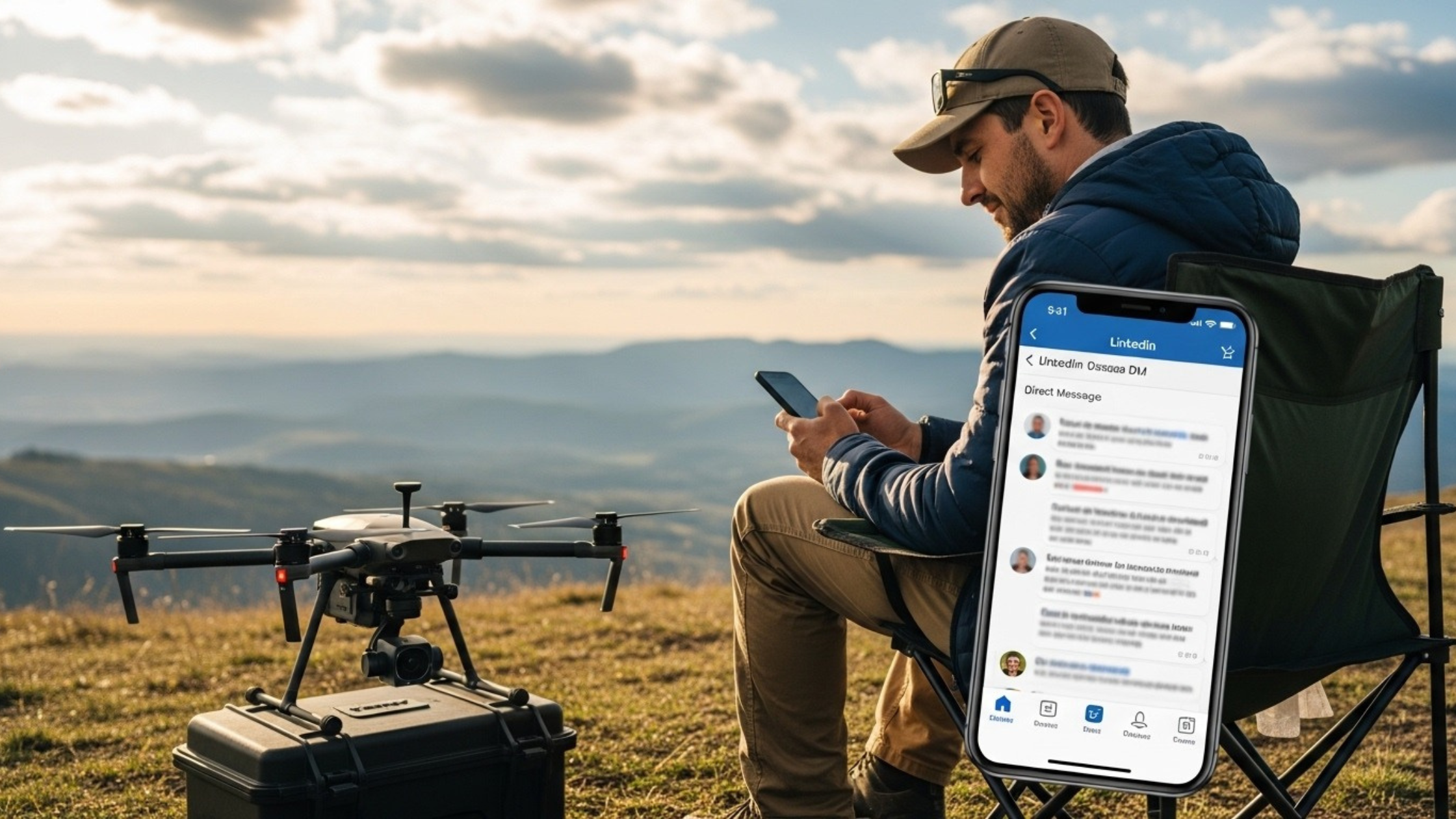
Most drone operators send one or two messages and then stop. They interpret silence as rejection. In B2B sales, silence almost always means the person is busy, not that they're uninterested.
The data on this is consistent across industries: most B2B conversions happen between the 5th and 12th touch. The vast majority of salespeople give up before touch 3. This means that persistence alone, without any other change to your approach, would dramatically increase your conversion rate.
But persistence without a system becomes chaos. You can't manually track who you've messaged, when, what you said, and what the next step is across 20, 50, or 100 prospects. Without a system, follow-up becomes another thing you intend to do and don't.
The Solution:
Build a simple, repeatable follow-up sequence for every prospect. A strong sequence might look like this:
- Day 1: Initial outreach - specific, problem-led, short
- Day 4: Follow-up 1 - add a piece of value (a relevant insight, case study, or market data point)
- Day 10: Follow-up 2 - reference something current about their operation or sector
- Day 18: Follow-up 3 - a direct ask for a 15-minute call
- Day 30: Follow-up 4 - a low-friction check-in that keeps the door open
Each touch should add something, a new angle, a new piece of context, a relevant development in their sector. You're not repeating the same message five times. You're building a case across five moments.
Track every prospect in a CRM, even a simple spreadsheet works at the start. Know who's in what stage, when you last contacted them, and what the next action is. Without that visibility, your pipeline is guesswork.
View GAU Case Studies — see how drone entrepreneurs used structured sales systems to move from inconsistent outreach to consistent deal flow.
The Missing Layer: No Operating System for Sales
Underneath all five of these problems is a single root cause: most drone businesses have no operating system for sales. They have great technical skills, solid service delivery, and genuine expertise, but no defined process for generating leads, qualifying prospects, sending outreach, following up, and closing contracts.
An operating system for drone sales doesn't have to be complex. At its core it needs:
- A defined ICP that tells you exactly who to target
- A lead list of qualified prospects based on that ICP
- A messaging framework built around the buyer's problem
- A follow-up sequence with set intervals and templates
- A simple CRM to track every deal and every next action
- A proposal template that converts interest into commitment
With those six components in place, sales stops being a scramble and becomes a repeatable system. You know what to do each week, you know where every deal stands, and you know exactly how to move each one forward.
Explore GAU's Sales & Growth Systems — walk away with your ICP defined, your pipeline built, your messaging sharpened, and your follow-up system in place.
One More Advantage: Know Who to Reach Before You Reach Out
Even a perfect sales system underperforms if you're targeting the wrong companies. The fastest way to find qualified buyers, companies with active operations, visible problems, and existing vendor budgets is market intelligence.
Global Air Intel™ is GAU's monthly deal intelligence brief. Each issue delivers qualified leads, active bid opportunities, relevant local events, and clear next steps, personalized to your service focus and geography. Instead of spending hours researching who might need your services, you receive a curated list of companies that already fit your ICP and are showing buying signals right now.
Download a Free Sample Intel Report — see exactly what a month of drone deal intelligence looks like before you commit.
Stop Guessing. Start Closing.
Drone sales and marketing doesn't have to be the hardest part of your business. It just requires the right framework, a defined target, a sharp message, a consistent follow-up system, and market intelligence that tells you where the money is moving.
Global Air U has built every one of those resources specifically for drone and autonomy companies. Whether you need deal intelligence, a complete sales system, or the tools to sharpen your brand and proposals, everything you need is in one place.
Get Your Free Global Air Intel™ Sample Report
FAQ: Drone Sales and Marketing
Why is marketing so hard for drone service providers?
Most drone operators come from technical, not commercial, backgrounds and spend the majority of their time on field work. That leaves little time or mental bandwidth for consistent outreach, messaging development, or pipeline management. The challenge is structural, not motivational which means it requires a system to fix, not just more effort.
What is an Ideal Client Profile (ICP) and why does it matter for drone marketing?
An ICP is a precise definition of the type of company you're best positioned to serve, including their sector, operational profile, specific problems, and budget signals.
How many follow-ups should I send to a drone services prospect?
Most B2B conversions happen between the 5th and 12th touch. Two follow-ups — the industry average are almost never enough. A strong follow-up sequence runs 4 to 6 touches over 30 days, with each message adding a new angle, piece of value, or relevant insight rather than simply repeating the original pitch.
What's the biggest mistake drone businesses make with their sales messaging?
Generic, service-description messaging. Saying 'we provide drone services for X industry' describes capability but gives the prospect no reason to act. Effective messaging names the specific problem, the cost of leaving it unsolved, and the concrete outcome your service delivers. That's what earns a response.
What does a drone business sales operating system include?
At minimum: a defined ICP, a qualified lead list, a problem-led messaging framework, a multi-touch follow-up sequence, a CRM to track deals, and a proposal template. With those six components in place, sales becomes a repeatable process rather than a weekly scramble.
How do I find qualified drone service leads without spending hours on research?
Market intelligence services like Global Air Intel™ deliver qualified leads, active bids, and buying signals monthly, removing the research burden entirely. Combined with a defined ICP and a tested sales sequence, this is the fastest path from outreach to closed deal for drone service providers.
Get a Free Global Air Intel™ Sample Report