
What a Drone Business Agent Actually Does
May 12, 2026
Agent' is one of the most used and least understood words in the AI conversation right now.
Spend ten minutes reading AI coverage and the word appears everywhere , autonomous agents, agentic AI, multi-agent systems, agent frameworks. Most of the discourse is abstract enough to feel irrelevant to the actual operational reality of running a drone service business.
The result: most drone operators have either dismissed agents as a future technology that doesn't apply to them yet, or have a vague sense that agents are some kind of advanced AI feature that requires technical expertise to build and deploy.
Both assumptions are wrong. And the cost of those assumptions is real.
This post demystifies what an AI agent actually is, explains precisely what it does in the context of a drone business , using specific, concrete examples that map to real operational tasks , and shows why the gap between operators who have agents running and operators who don't is already producing measurably different business outcomes.
What an Agent Actually Is: The Plain-Language Definition
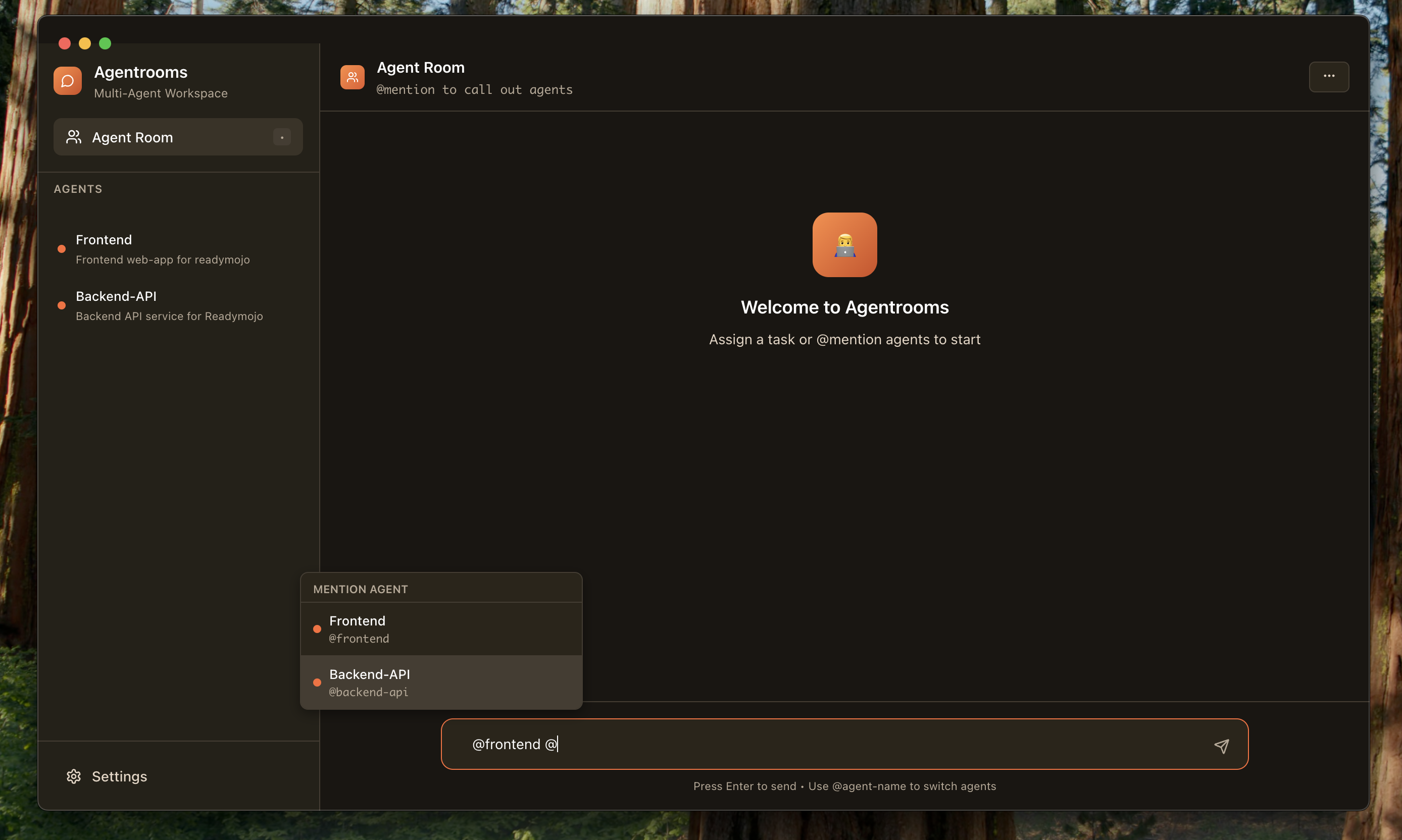
An AI agent is a configured system that executes a defined workflow automatically when triggered by a specific input , without requiring the operator to manually open a tool, type a prompt, and ask for help each time.
That distinction , automatic execution on trigger versus manual prompting when remembered , is the entire difference between an agent and a tool.
A tool is reactive. The operator opens it, provides input, receives output, closes it.
An agent is proactive. When a specific thing happens , a project intake form is submitted, a flight is completed, a lead has been silent for seven days , the agent executes its defined workflow and produces the output without anyone having to initiate it.
Four Myths About Agents That Are Keeping Drone Operators Behind

MYTH 1: Agents are for large companies or technical teams.
REALITY: Agents built for drone businesses run on no-code platforms accessible to any operator who can use email and a web browser. The configuration requires business knowledge , understanding the inputs, the workflow, and the desired output , not coding. The technical threshold is lower than operating most drone software.
MYTH 2: Agents make decisions the operator should be making.
REALITY: A well-configured drone business agent handles the structured, repeatable parts of a task , formatting, sequencing, drafting, triggering. It does not make the professional judgments that require expertise, field knowledge, or client-specific context. The operator reviews and approves. The agent handles the scaffolding.
MYTH 3: Building an agent requires months of setup.
REALITY: A proposal agent for a drone business can be configured, tested, and running in a two-to-three hour working session. A site report agent takes longer due to output complexity, but both are buildable within the first two weeks of a structured programme. The learning curve is in knowing how to structure the workflow, not in the tools themselves.
MYTH 4: The output won't be good enough to send to real clients.
REALITY: An agent configured with business-specific context , the ICP, the offer language, the brand voice, the deliverable format, the client's stated problem , produces output of consistently higher quality than a manually drafted document produced under time pressure. The comparison is not agent vs. best-case manual. It is agent vs. the proposal written at 9pm after a full day in the field.
Three Drone Business Agents Worth Building First
The agents below are not hypothetical. They are the specific configurations that drone operators are building and running right now , with the exact workflow, trigger, and output mapped for each one.
The Proposal Agent
Without agent: 4 hours built manually, inconsistently, often late With agent: 15 minutes, branded, specific, delivered within hours of the meeting
The proposal agent sits at the intersection of the highest-leverage and most time-consuming task in most drone businesses. The trigger is a project intake form , a short set of structured inputs the operator fills in immediately after a client conversation: client name, sector, site type, stated problem, scope of work, deliverables, timeline, and any specific context from the meeting. The agent processes those inputs against a prompt library built around the business's specific ICP, offer framework, and brand voice, and produces a complete, formatted proposal draft. The operator reviews, personalises the three to five sentences that genuinely require human judgment, and sends. The four-hour task becomes fifteen minutes. The proposal arrives the same day as the meeting.
Real-world output: A utilities client meeting happens Tuesday at 2pm. By 4pm, a branded proposal referencing their specific inspection challenge, the operator's relevant case study, and a clear scope and pricing structure is in their inbox. The competitor who builds manually sends Thursday.
The Site Report Agent
Without agent: 1–3 days from flight completion to client delivery With agent: Same-day delivery, consistent format, client-ready before the equipment is packed
For inspection-focused drone businesses, the deliverable is not the flight. It's the report. And the report is where the majority of post-flight time disappears. The site report agent is configured with the operator's specific report format, the client's expected output structure, and a prompt framework that translates raw field observations into a formatted professional document. The trigger is the operator's post-flight observation notes , entered via voice note, typed notes, or a short structured form completed on-site. The agent produces a report draft in the correct format, with the correct sections, organised for the specific client type. The operator reviews for technical accuracy and adds the professional assessment that requires their expertise. Same-day delivery becomes the standard, not the goal.
Real-world output: A roofing inspection operator completes three surveys in a day. By the time they drive back to the office, three report drafts are waiting for review. All three are delivered to clients before end of business. The turnaround that previously took until Thursday happens on Monday.
The Client Follow-Up Agent
Without agent: Inconsistent, forgotten when busy, stopping after two touches With agent: Structured sequence running to completion regardless of field schedule
The follow-up agent addresses the single most common point of revenue leakage in drone business pipelines. Most operators follow up once or twice, don't receive a response, and let the lead go cold. Research on B2B purchasing behaviour consistently shows decisions require six to eight touchpoints. The gap between touch two and touch six is where most drone deals are lost , not to competitors, but to the absence of persistence. The follow-up agent is configured with a defined sequence of six to eight touches, each with a specific angle, a specific value-add, and a specific next step. The trigger is the lead entering the pipeline or a defined period of silence. The agent queues each touch for operator review and send , or in a fully automated configuration, handles the send automatically against defined criteria. The sequence runs to completion regardless of how full the field calendar is.
Real-world output: A warm lead goes quiet after an initial conversation. Without the agent: the operator intends to follow up, gets busy, the lead cools, the opportunity is lost. With the agent: touch three arrives twelve days later with a relevant case study. Touch five arrives with a simple 'checking in' framed around a market development in their sector. The lead responds on touch five. The deal moves forward.
The Question Worth Sitting With
The operators who read this and think 'this would help my business' are not wrong. It would. The question is not whether agents are useful , that is settled. The question is how they get built for a specific business, configured around a specific ICP and service type, and deployed in a way that actually runs.
That is a different question from understanding what an agent is. And it requires a different kind of support than a blog post can provide.
The EQUALIZ® by Global Air U is a 4-week cohort built specifically to answer that question for established drone operators. Weeks 3 and 4 of the programme are dedicated entirely to agent configuration and deployment , building the specific agents above, configured around each participant's actual business, running before the cohort ends.
The agents are not demonstrated. They are built, tested, and running by the time the final session closes.
Ready to build the agents that run the business in the background?
The EQUALIZ® cohort is where drone operators build their proposal agent, site report agent, and follow-up agent , configured for their specific business, running before the programme ends. 8 live working sessions. Guaranteed 10+ hours saved per week.
Learn more and reserve a seat → globalairu.com/ai
FAQ
What is the difference between a prompt and an agent?
A prompt is a single instruction given to an AI tool by the operator each time a task comes up. An agent is a configured system that executes a defined sequence of steps automatically when a specific trigger occurs , without the operator initiating it manually. A prompt produces one output on demand. An agent runs a workflow end-to-end, potentially including multiple steps, tool integrations, and outputs, without requiring manual initiation each time.
Does a drone business agent send things to clients automatically, or does the operator still review everything?
Both configurations are possible, and the right choice depends on the task and the operator's comfort level. Most drone business operators start with a 'review and approve' configuration , the agent produces the output, the operator reviews it and sends. As confidence in the output quality builds, some tasks shift to fully automated. For enterprise and government clients, a review step is generally advisable as part of the output quality protocol, and can be documented