
Drone Business Opportunities in Africa and Emerging Markets
Apr 27, 2026
Where the Funding Is Going and How Enterprise Drone Companies Can Position to Win
The drone market growth data you read about in industry reports is real. What most of those reports leave out is where a significant portion of that growth is actually happening and who is funding it.
Across Africa and emerging markets in South Asia and Central Asia, billions of dollars in institutional capital from the World Bank, the African Development Bank, and major NGOs are actively flowing into programmes that require drone services: land mapping, disaster response, agricultural monitoring, infrastructure inspection, and cadastral surveying.
These are not speculative future opportunities. They are active, funded mandates and most of them are being executed through consortium bids and vendor partnerships, not open consumer markets. Enterprise drone companies that understand how this funding ecosystem works, and who show up with the right positioning and the right local relationships, are the ones winning the contracts.
This is the playbook.
The Scale of the Opportunity
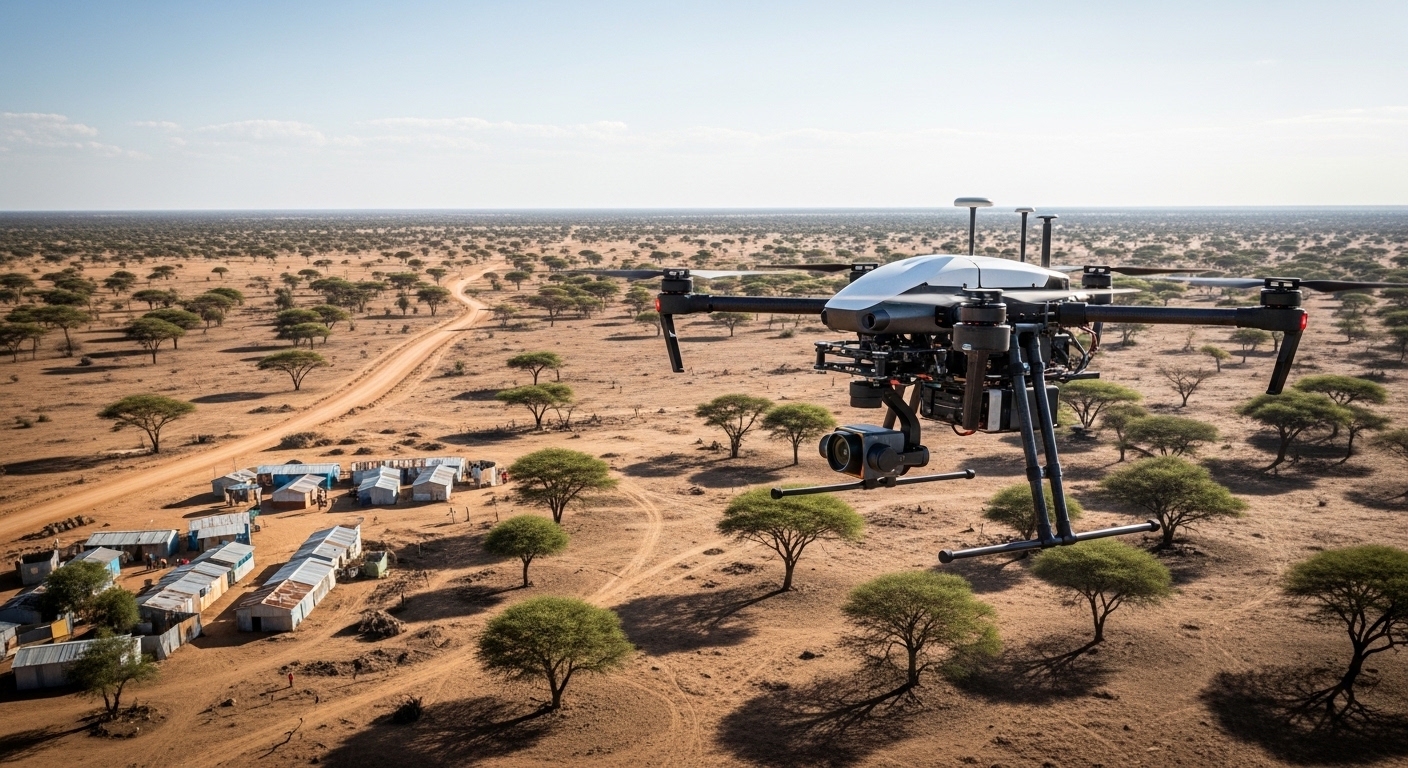
Africa’s drone market is not a future projection. It is an active and accelerating investment environment. Africa drone market revenue in 2025 (Statista) was estimated to be $49M+ with a CAGR of 4.73%. As of 2025, 90% of rural African land still remain unmapped and unregistered.
That final figure, 90 percent of rural land in Africa remaining unmapped and unregistered, represents one of the largest sustained drone contract opportunities in the world. Governments across the continent are under institutional pressure from the World Bank, the African Development Bank, and bilateral donors to digitize land records, resolve tenure disputes, and build geospatial infrastructure. Drone mapping is the primary tool being deployed to do it.
The same pattern is emerging in disaster response, agricultural monitoring, and infrastructure inspection. In each case, institutional funders are providing capital, national governments are the clients, and private sector drone companies, operating as consortium partners or direct vendors are delivering the work.
Where the Institutional Funding Is Going: Five Active Use Cases
Mozambique
Use Case: Drone-based disaster mapping and flood response
Funder: African Development Bank + Korea-Africa Economic Cooperation (KOAFEC) Trust Fund
Enterprise Opportunity: Real-time imagery capture, AI-assisted damage assessment, and infrastructure mapping contracts under active institutional management. The AfDB-funded Drone-Based Disaster Management Project launched in April 2025 deployed drones in the January 2026 floods affecting over 690,000 people. Follow-on programming is expected.
Tanzania & Zanzibar
Use Case: Land cadastre digitization and national tenure mapping
Funder: World Bank — Zanzibar Mapping Initiative and Tanzania Land Programme
Enterprise Opportunity: The Zanzibar Mapping Initiative is one of the largest drone-based mapping projects ever executed. Tanzania’s national land tenure programme continues to scale. Contracts involve orthomosaic capture, GCP placement, and data processing at survey grade. Multi-year, repeat-engagement work.
Ethiopia & Kenya
Use Case: Land registration, GIS integration, and agricultural mapping
Funder: World Bank · European Commission (its4land project) · bilateral development agencies
Enterprise Opportunity: Ethiopia is actively scaling GIS-based land certification. Kenya is a primary testing hub for next-generation drone technology with long-term commercial scaling planned for 2026. Both countries have active regulatory frameworks and demonstrated appetite for drone vendor partnerships.
Rwanda
Use Case: Healthcare delivery, government logistics, and drone corridor development
Funder: Rwandan Government · Gavi the Vaccine Alliance · UNICEF
Enterprise Opportunity: Rwanda has executed over 100,000 drone medical deliveries since 2016 and is now Africa’s most mature drone regulatory environment. It is the primary model being replicated across the continent. Enterprise drone companies with logistics or delivery capabilities will find Rwanda an accessible market entry point with government-backed frameworks already in place.
Nepal & South Asia
Use Case: Ecosystem development, SME support, and disaster resilience mapping
Funder: World Bank - Drone Ecosystem Acceleration Programme (DEAP)
Enterprise Opportunity: The World Bank’s DEAP programme in Nepal hosted the first South Asia Drone Forum in April 2025. The programme is actively supporting drone SMEs with mentorship, innovation funding, and technical assistance. It represents a direct pathway for enterprise drone companies to enter South Asian markets through institutional partnership rather than cold market entry.
How the Funding Flows: What Enterprise Drone Companies Need to Know
Understanding where the money is going is only half the picture. The other half is understanding how institutional funding actually reaches drone service providers — because the path is rarely direct.
The Consortium Model
Large-scale projects funded by the World Bank or African Development Bank are almost never awarded to a single drone operator. They are structured as consortium bids, where a lead organisation, often an engineering firm, a development consultancy, or a local government agency, partners with specialist subcontractors who deliver specific technical components.
Drone mapping, inspection, and data processing are almost always subcontracted components within these larger bids. The enterprise drone company that wins is the one that has built relationships with the lead consortium partners before the bid is published — not the one that responds to the RFP cold.
GAU has direct operational experience in Nigeria, Ethiopia, Kyrgyzstan, and across 26 countries. The relationships, cultural fluency, and on-the-ground market knowledge required to enter these markets effectively are not built through internet research. They are built through presence and partnership. This is precisely the access that GAU’s Partnerships & Market Entry service provides.
The Local Partner Requirement
Most institutional procurement in Africa and South Asia requires or strongly prefers local partner involvement. A US- or European-based drone company bidding on a Tanzanian land mapping project without a credible local entity in the consortium is at a structural disadvantage.
The strategic move is to identify and vet local drone companies, GIS firms, or technology integrators in target markets before an opportunity arises and build those relationships when there is no specific contract at stake. That is when the terms are most favorable and the relationship is most genuine.
Tracking Active Bids and Programme Signals
Institutional project announcements, government procurement notices, and programme signals across these markets are distributed across dozens of sources: development bank procurement portals, national tender databases, UN agency announcements, and sector-specific newsletters. Most drone companies lack either the time or the systems to monitor these sources consistently.
This is precisely the gap that deal intelligence is designed to close. Knowing which projects are entering procurement phase, who the key decision-makers are, and what the bid structure looks like is what separates companies that win emerging market contracts from those that discover the opportunity after the award has been made.
What Enterprise Positioning Looks Like in These Markets
Emerging market drone contracts are not won on price. They are won on demonstrated competence, institutional credibility, and local alignment. Enterprise drone companies that position effectively do four things:
- They document their technical capability in the specific use cases being funded, cadastral mapping, disaster response, agricultural monitoring, or infrastructure inspection with case studies that speak the language of institutional procurement.
- They build consortium relationships before bids are published, approaching development consultancies, engineering firms, and local GIS companies as potential partners rather than competitors.
- They understand the regulatory environment in their target markets. Rwanda, Kenya, Tanzania, and Ethiopia all have active drone regulatory frameworks. Entering without understanding airspace authorisation, local pilot requirements, and data sovereignty rules is a fast path to disqualification.
- They monitor programme signals and funding flows systematically, so they are in conversation with the right people at the right time, not scrambling to respond after the RFP drops.
Why GAU Is Uniquely Positioned to Help
Global Air U has trained drone entrepreneurs across 26 countries and has direct operational experience in Nigeria, Ethiopia, Kyrgyzstan, the UAE, and beyond. This is not market research read from a report. It is firsthand knowledge of how drone businesses enter, operate, and scale in markets where the Western enterprise sales playbook does not apply directly.
Global Air Intel™ was built specifically for this opportunity, tracks where capital is moving, including institutional funding, active bids, and decision-maker contacts, and delivers that intelligence directly to your inbox each month. GAU’s Partnerships & Market Entry service provides the vetted local introductions, regulatory context, and market entry strategy to execute on that intelligence.
The opportunity in Africa and emerging markets is not theoretical. The funding is active, the contracts are real, and the companies winning them are the ones who are already in the room. The question is whether yours will be.
Ready to track where the funding is moving and position your company to win global drone contracts?
Global Air Intel™ delivers curated monthly intelligence on qualified leads, live bids, and institutional funding signals, including emerging market opportunities across Africa and South Asia. GAU’s Partnerships & Market Entry service provides vetted local introductions and a clear entry path into the markets where institutional capital is actively flowing.
Get Your Free Global Air Intel™ Sample →
FAQ: Drone Business Opportunities in Africa and Emerging Markets
Which African countries have the most active drone contract opportunities right now?
Tanzania, Ethiopia, Kenya, Rwanda, and Mozambique are the most active in 2026. Tanzania and Ethiopia have ongoing World Bank-supported land mapping programmes. Kenya is scaling commercial drone operations with government backing. Rwanda has the continent’s most mature drone regulatory and logistics infrastructure. Mozambique has active AfDB-funded disaster response contracts.
Do I need a local partner to win institutional drone contracts in Africa?
In most cases, yes. Institutional procurement frameworks, particularly World Bank and African Development Bank projects, strongly prefer or require local partner involvement. Building consortium relationships with local GIS firms, engineering companies, or technology integrators before a bid is published is the most effective entry strategy.
What types of drone services are in highest demand in emerging markets?
Land cadastre mapping and surveying, disaster response and flood assessment, agricultural monitoring and crop health analysis, infrastructure inspection, and environmental monitoring are the five highest-demand applications currently being funded by institutional sources across Africa and South Asia.